
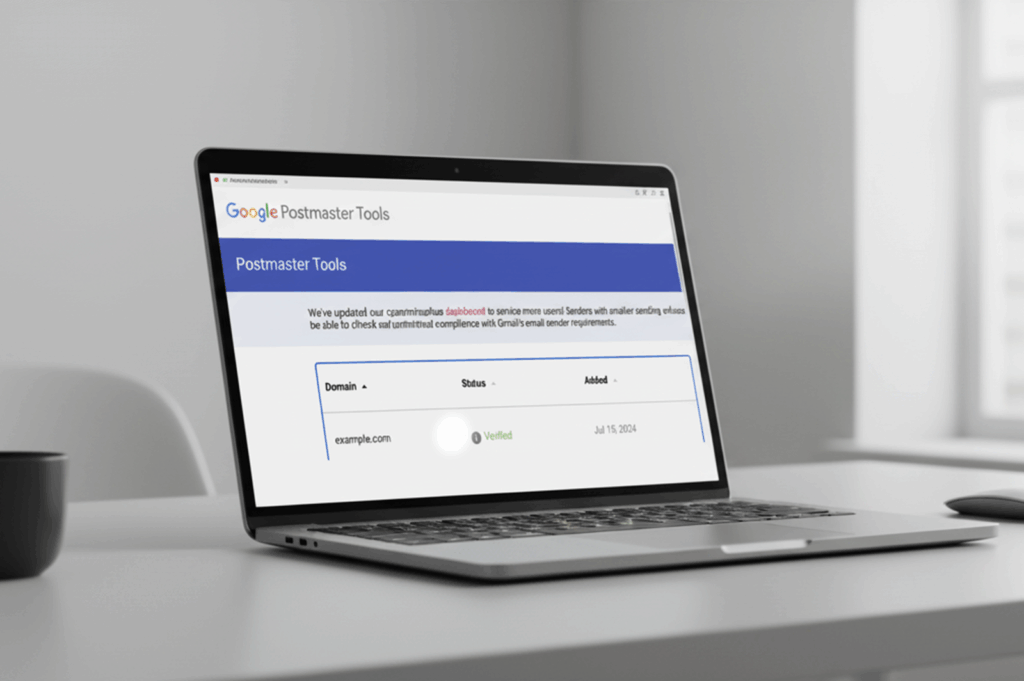
On October 31st Google permanently retired the legacy Postmaster Tools interface (v1) and removed two of the most closely followed dashboards used for monitoring email deliverability: Domain Reputation and IP Reputation. If you’ve been relying on Google Postmaster Tools to monitor Gmail deliverability, this interface refresh represents a renewed emphasis on sending relevant content and proactive deliverability management. Here’s what you need to know right now and how to prepare for peak sending this holiday season.
Reputation Scores Are Gone
Domain and IP Reputation dashboards have been permanently removed. While Google will still use reputation internally to determine inbox placement, it’s no longer being shared with senders. The reason for this? The dashboards encouraged reactive behavior vs. proactive management. Senders have historically only taken action when reputation scores dropped, but at that point, the damage was done and emails were already being filtered. By removing reputation dashboards, Google is attempting to change this behavior: instead of using reputation scores as a way to mitigate damage, senders should be adhering to best practices regardless of their score. Deliverability management shouldn’t be reactive – don’t wait for red flags. Rather, it should be managed continuously by incorporating consistent authentication, regular list hygiene, respectful unsubscribe handling, and high-quality, relevant content that subscribers actually want. If you aren’t following these sending fundamentals, make it a priority to adjust your strategy now.
Compliance Is Now Your Primary Health Signal
Google replaced vague reputation metrics with the new Compliance Status dashboard – a pass/fail checklist showing whether you meet Gmail’s requirements:
- Technical: SPF, DKIM, DMARC authentication, valid DNS records, TLS encryption
- Behavioral: Spam rates below 0.3% (target 0.1%), unsubscribe processing within 48 hours, one-click unsubscribe
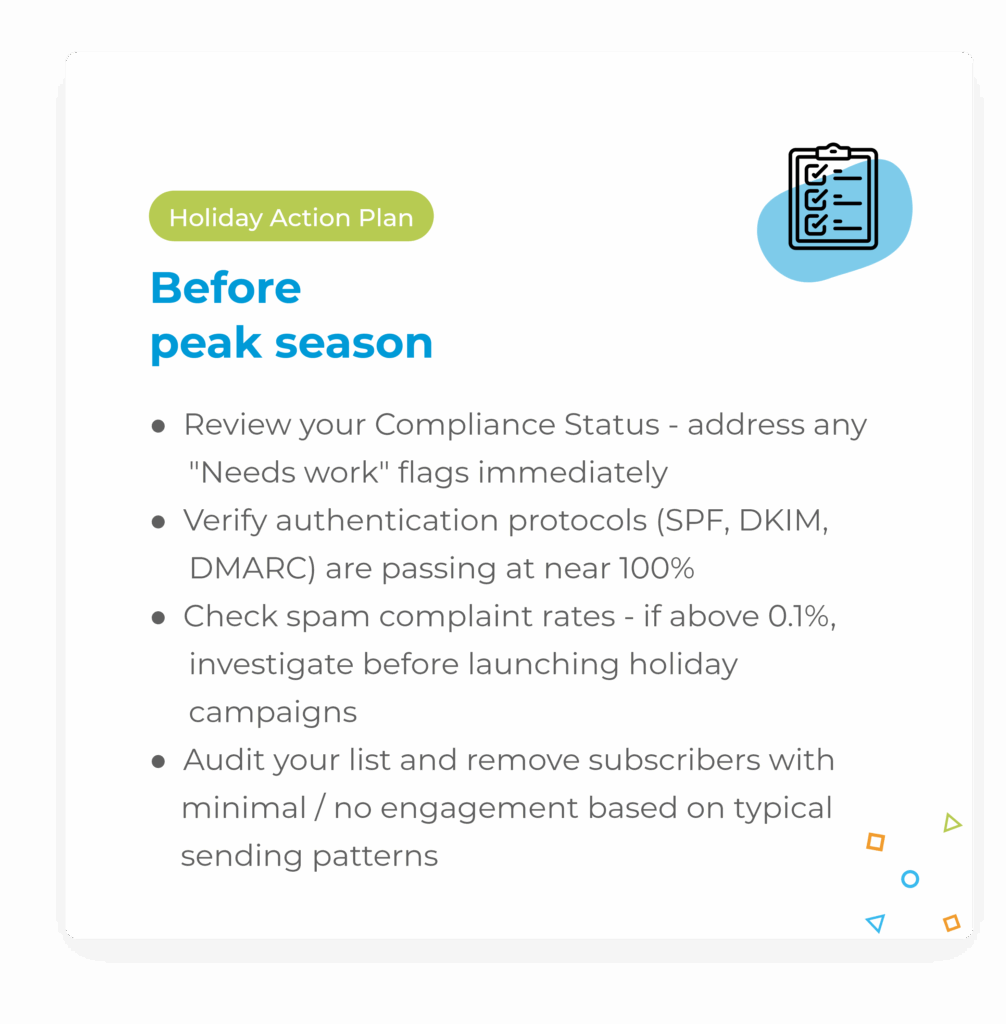
If anything shows “Needs work” on this dashboard, make it a priority to fix it ASAP. Non-compliance directly impacts deliverability – with no exceptions – and you can’t afford inbox placement issues during peak season.
Engagement Remains Critical
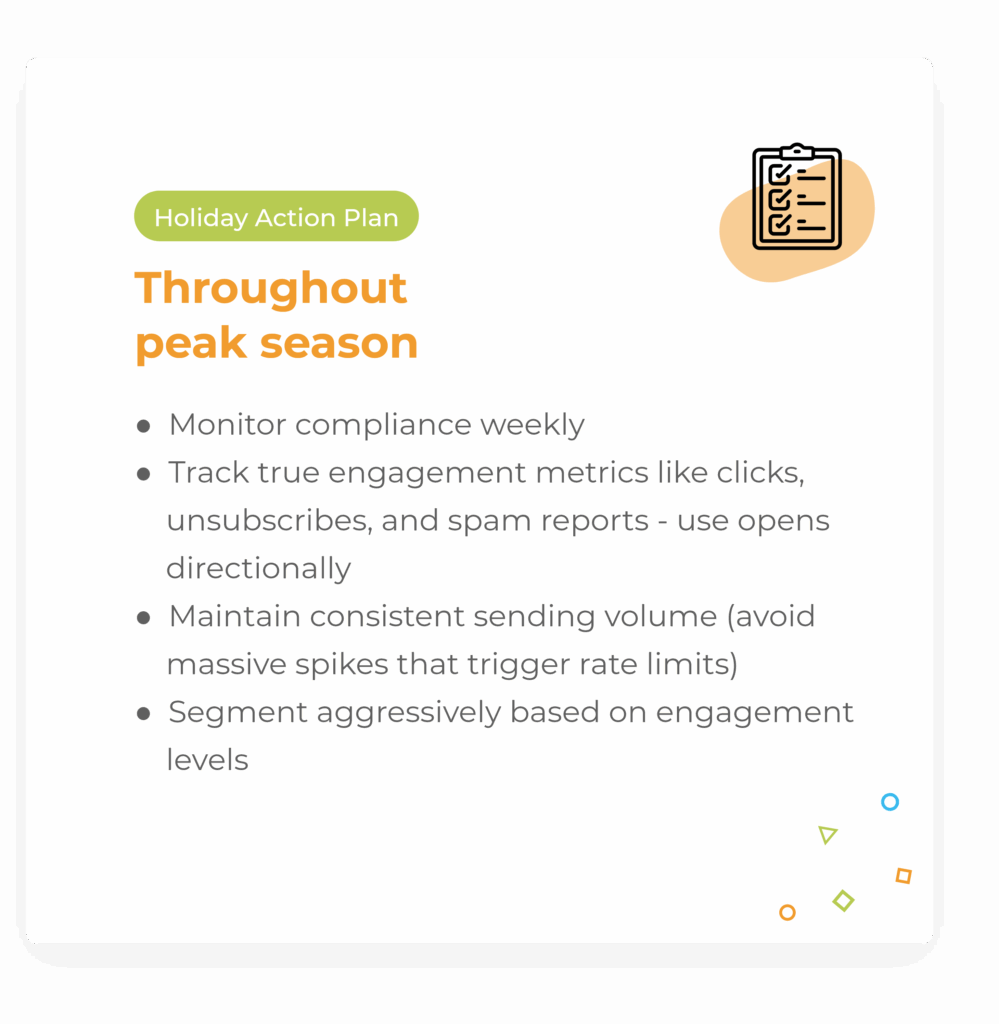
Without visible reputation scores, Gmail’s evaluation is purely behavior-based. The focus is on how subscribers are engaging with emails every day. Within your email platform, prioritize the ongoing monitoring of engagement signals (opens, clicks, unsubscribes) and be prepared to take action if trends shift. Additionally, make sure your lists are pristine prior to the holiday volume spike, as sending to disengaged subscribers during peak season could lead to poor deliverability.
What Else Changed
- Your Monitoring Strategy Got More Complex – success now requires interpreting multiple data sources: spam rates, delivery errors, authentication status, feedback loops, and engagement patterns. You can’t rely on a single metric anymore.
- The API Is Being Rebuilt – a new v2 API launches by end of 2025 with an incompatible data schema. If you’ve built custom dashboards or automated reports using the v1 API, they’ll break without migration. Start planning now to avoid monitoring gaps during holiday campaigns.
- More Features Are Coming (Eventually) – Google promised “more useful and actionable” dashboards by year-end but hasn’t provided specifics. Work with what’s available now and don’t wait for new features to adjust your strategy.
- Understanding Your New Primary Tool – the Compliance Status dashboard operates at two levels:
- Primary Domain View (Default): Shows compliance status for your entire organizational domain (yourdomain.com), providing a holistic view of your email program’s health.
- Subdomain Comparison View (Optional): If you’ve added specific subdomains to Postmaster Tools (marketing.yourdomain.com, transactional.yourdomain.com), you can select them to see side-by-side compliance comparisons.
Note: your subdomain cannot achieve compliance if your primary domain is non-compliant. Gmail evaluates top-down, so it’s crucial to fix primary domain issues first, as they cascade to everything else.
The Bottom Line
This change is actually good news. While losing the reputation dashboards might be uncomfortable right now, Google actually did you a favor. Those scores were lagging indicators that only notified you of issues after deliverability was impacted – they didn’t prevent issues. The new approach forces healthier email practices like focusing on compliance, list quality, engagement patterns, and recipient experience, rather than chasing arbitrary scores that didn’t tell the whole story. And while reputation still matters (even if you can’t see it), it shouldn’t be viewed as a metric to monitor, but as a daily practice of delivering value to engaged subscribers while maintaining technical excellence.
The deliverability game hasn’t changed – the scoreboard just got updated.
Want to learn more, talk about your deliverability, or meet with a deliverability expert? Let’s talk.


Fred Homner
Director of Customer Success & Salesforce Practices

Sam Kosakowski
Solution Architect

Zanah Kagan
Marketing Cloud Practice Lead